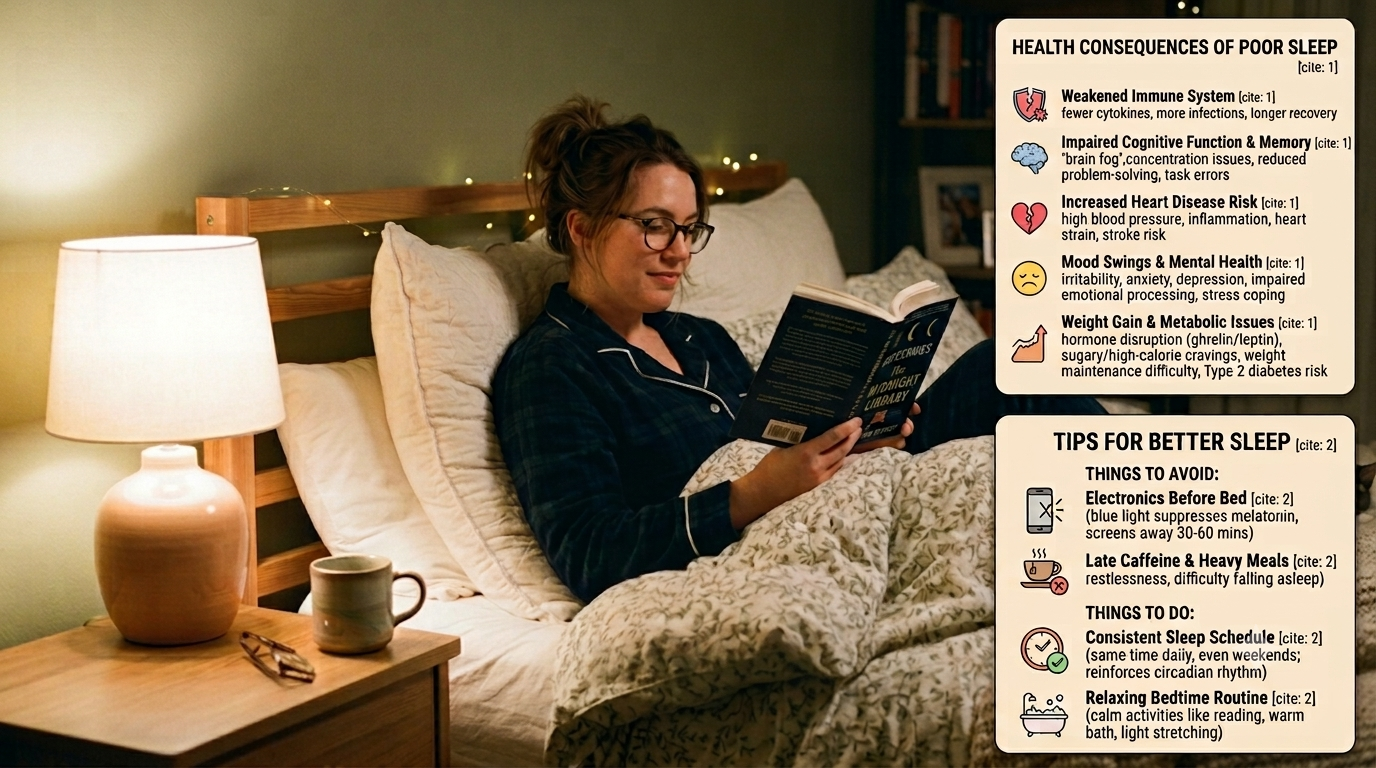
Most of us have stayed up late thinking we'd get more work done. It feels productive at the time, but the truth is that consistently missing sleep can do far more harm than good.
Sleep isn't just about feeling rested. It's when your brain and body recover, recharge, and prepare for the next day. When you don't get enough sleep, the effects show up in almost every part of your life—from your focus and mood to your long-term health.
1. Your Brain Doesn't Perform at Its Best
One of the first things you'll notice is brain fog.
You may struggle to concentrate, forget simple things, or find it harder to come up with creative ideas. Even everyday tasks can start to feel mentally exhausting.
2. Your Mood Changes
Lack of sleep doesn't just make you tired—it also affects your emotions.
You might become more impatient, react more strongly to small problems, or feel anxious and stressed more often than usual. Over time, poor sleep can even increase the risk of depression.
3. Your Immune System Gets Weaker
When your body doesn't get enough rest, it becomes less effective at fighting off viruses and bacteria.
That's why people who regularly sleep too little tend to catch colds more often and usually take longer to recover when they get sick.
4. Weight Gain Becomes Easier
Sleep also plays a major role in controlling hunger.
Without enough rest, your body starts craving sugary snacks, junk food, and late-night meals. At the same time, your metabolism slows down, making it easier to gain weight.
5. Your Heart Pays the Price
Over time, chronic sleep deprivation can increase blood pressure and place extra stress on your heart.
This raises the risk of serious health problems such as heart disease and stroke.
6. It Can Affect Blood Sugar
Not getting enough sleep makes it harder for your body to use insulin efficiently.
If this continues for a long period, it may increase the risk of developing Type 2 diabetes.
7. Your Skin Shows the Difference
Poor sleep often appears on your face before anywhere else.
Dark circles, dull skin, and early wrinkles become more noticeable because your skin doesn't have enough time to repair itself overnight.
8. You Make Poorer Decisions
When you're exhausted, your judgment isn't as sharp.
Whether you're working, studying, or driving, you're more likely to make mistakes or overlook important details.
9. You're Tired All Day
Instead of feeling energized, you may spend the entire day fighting fatigue.
Some people even experience brief "micro-sleeps," where they unintentionally fall asleep for a few seconds—a dangerous situation, especially while driving.
10. Your Relationships Can Be Affected
Sleep deprivation doesn't only affect your body.
Low energy, increased stress, and reduced interest in intimacy can all put pressure on personal relationships over time.
Simple Habits for Better Sleep
Improving your sleep doesn't require complicated routines. Small, consistent habits can make a big difference.
What You Should Do
- Go to bed and wake up at the same time every day.
- Keep your bedroom cool, quiet, and dark.
- Spend the last hour before bed relaxing instead of working.
- Get some sunlight during the day.
- Exercise regularly, but avoid intense workouts late at night.
What You Should Avoid
- Avoid phones, laptops, and TVs before bedtime.
- Stop drinking coffee or energy drinks several hours before sleeping.
- Don't eat heavy meals late at night.
- Limit alcohol and nicotine, as they can reduce sleep quality.
- If you can't fall asleep after about 20 minutes, leave the bed for a while and do something relaxing before trying again.
Final Thoughts
Many people see sleep as something they can sacrifice to get more done, but the opposite is often true. Quality sleep improves focus, decision-making, productivity, and overall health.
If you want to perform at your best—whether at work, in school, or in everyday life—getting enough sleep isn't a luxury. It's a necessity.
