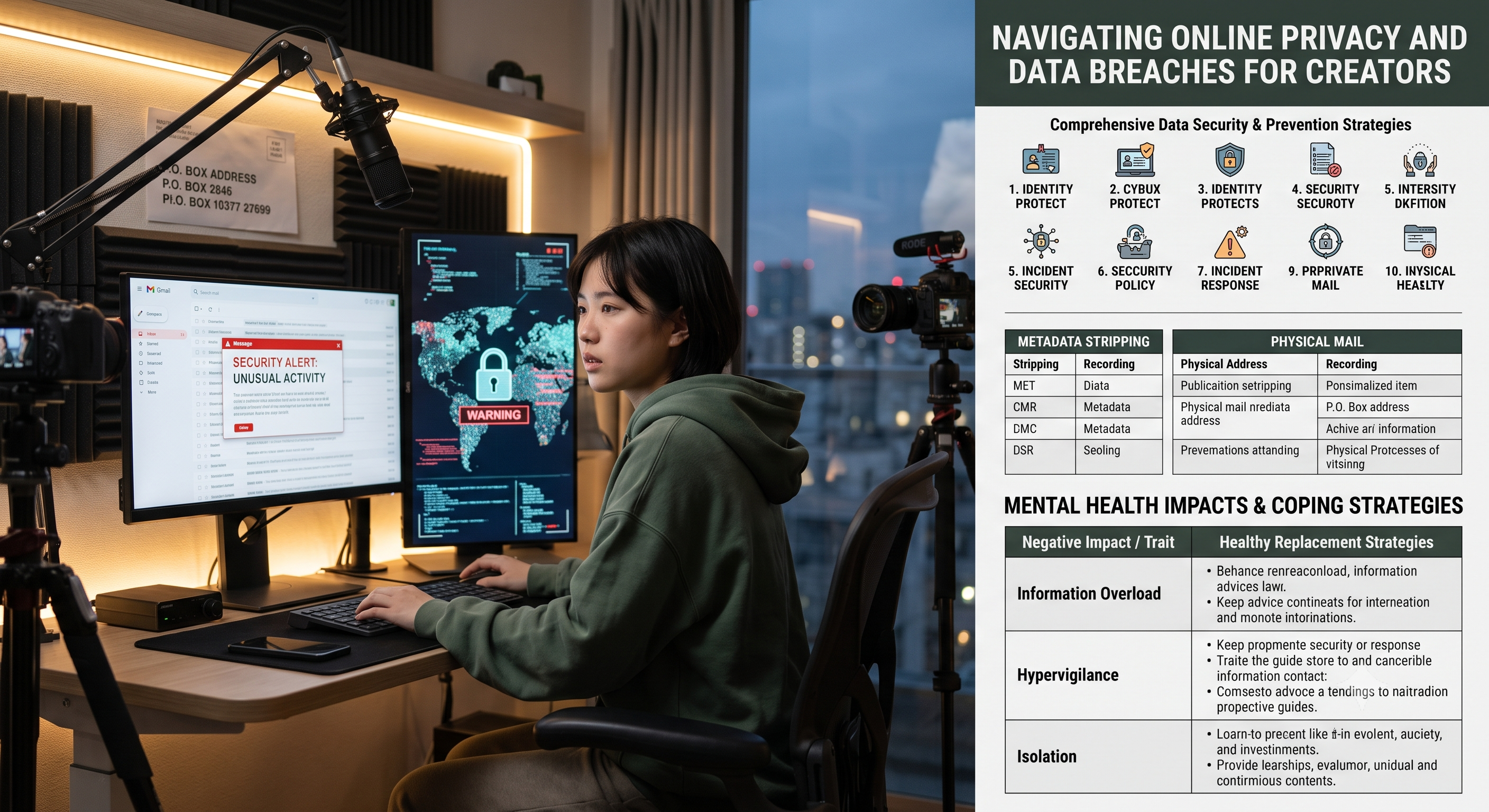
The exposure of personal information online poses an immediate threat to a content creator’s professional and personal life. When private details like addresses, phone numbers, or financial data are leaked, it compromises accounts and weakens audience trust. In a digital economy driven by reputation, data breaches can lead to lost sponsorships and identity theft, putting entire digital brands at risk.
Proactive preparation is essential to protecting digital assets and mitigating the harsh consequences of information exposure. Creators must invest in securing their primary communication channels, updating hardware access privileges, and implementing multi-factor authentication. By establishing immediate defense protocols and reducing digital vulnerabilities, professionals can protect their content pipelines and prevent unauthorized account takeovers.
Long-term protection requires a strategic, continuous approach to managing a digital footprint. Beyond basic password updates, creators must audit third-party application permissions, monitor public database registries, and maintain separate networks for personal and business tasks. Implementing these routine administrative habits ensures a sustainable career, allowing creators to focus on growth without the perpetual anxiety of unexpected data exposures.
Comprehensive Data Security & Prevention Strategies
1. Identity Protection & Account Security
-
Enforce Time-Based One-Time Passwords (TOTP) via dedicated authenticator apps on all platforms.
-
Utilize automated password managers to generate and store randomized, unique 16-character keys.
-
Disable SMS-based recovery options to eliminate the risk of SIM-swapping attacks.
2. Digital Footprint Management
| Action Item | Implementation Method | Expected Outcome |
| Data Broker Removal | Submit opt-out requests to public people-search databases. | Reduces public availability of home addresses and phone numbers. |
| Metadata Stripping | Clear EXIF data from images and videos before uploading. | Prevents tracking of exact geographic filming locations. |
| Old Account Auditing | Deactivate unused forums, old portfolios, and legacy social profiles. | Minimizes historical attack surfaces available to bad actors. |
3. Network and Hardware Security
-
Route all public Wi-Fi traffic through trusted, encrypted Virtual Private Networks (VPNs).
-
Isolate smart home devices and personal mobile hardware onto a separate guest Wi-Fi network.
-
Keep operating systems, firmware, and production software updated to patch zero-day vulnerabilities.
4. Communications and Inquiries
| Asset Category | Secure Configuration | Risk Avoidance |
| Public Email | Use a dedicated domain solely for business inquiries and sponsorships. | Protects primary administrative login emails from discovery. |
| Phone Contact | Deploy VoIP services (like Google Voice) for public-facing communication. | Prevents unauthorized SIM access and location tracking via cell towers. |
| Physical Mail | Direct all viewer mail, gifts, and contracts to a secure P.O. Box. | Conceals actual residential addresses from the general public. |
5. Legal and Financial Safeguards
-
Establish a formal business entity (like an LLC) to register domains and business assets anonymously.
-
Freeze personal credit files with major credit bureaus to block unauthorized loan applications.
-
Set up real-time transaction alerts on all business checking accounts and credit lines.
6. Platform Access & Third-Party Permissions
| System Component | Action Required | Safety Margin |
| API Integrations | Revoke access for legacy editing tools, analytics apps, and plugins. | Eliminates backdoor entries through compromised vendors. |
| Delegated Access | Use platform-native manager roles instead of sharing master passwords. | Restricts administrative control while allowing collaborative editing. |
| Recovery Codes | Print and physically lock master backup codes in a fireproof safe. | Guarantees account retrieval if primary devices are lost. |
7. Incident Response Planning
-
Maintain an offline hard-copy checklist of platform support links and emergency contact channels.
-
Draft pre-saved communication templates to quickly notify sponsors and followers if an account compromise occurs.
-
Back up raw video assets, project files, and system configurations daily to isolated external drives.
8. Domain and Hosting Privacy
| Infrastructure | Privacy Metric | Enforcement Strategy |
| WHOIS Registries | Enable private registration to mask ownership details. | Hides registrar names, emails, and phone numbers from public WHOIS lookups. |
| Web Hosting | Route website traffic through reverse proxies like Cloudflare. | Masks the true origin IP address of your website or server. |
| Storage Architecture | Encrypt cloud backup buckets containing sensitive identity documents. | Prevents unauthorized data reading even if storage buckets are breached. |
9. Social Engineering Defense
-
Conduct routine security awareness reviews to spot sophisticated phishing campaigns.
-
Treat unexpected sponsorship collaboration offers containing executable attachments with extreme skepticism.
-
Establish secondary confirmation channels before clicking links sent by regular business contacts.
10. Collaboration and Team Protocols
| Vulnerability Area | Policy Standard | Operational Goal |
| Shared Assets | Use encrypted credential vaults for team-wide asset sharing. | Prevents raw password exposure in text messages or group chats. |
| NDAs | Include strict confidentiality clauses in contractor agreements. | Prevents internal leaks of unreleased media or sensitive strategies. |
| Offboarding | Revoke cloud and server access immediately when a contractor leaves. | Eliminates lingering access points from former staff members. |
Mental Health Impacts & Coping Strategies
The sudden or prolonged exposure of private information can cause deep psychological distress, manifesting as hypervigilance, creative paralysis, and severe anxiety over public judgment. Recognizing these emotional patterns and consciously replacing toxic habits with structured, protective routines is essential for maintaining career longevity and personal well-being.
Healthy Replacements to Protect Psychological Well-being
-
Information Overload
-
What to Avoid / Eliminate: Doomscrolling public forums, comment sections, or search results to track what people are saying about a leak.
-
Healthy Replacement Strategies: Scheduled Security Updates. Limit data or mention checks to a strict 15-minute window once a day. Dedicate remaining screen-free hours to offline activities, reading, or processing with trusted peers.
-
-
Hypervigilance & Constant Alarm
-
What to Avoid / Eliminate: Repetitively checking account login logs, phone notifications, and security dashboards all night.
-
Healthy Replacement Strategies: Automated Alerts & Tech Boundaries. Delegate monitoring to automated alert systems that ping you only for critical failures. Establish a firm "digital sundown" by locking devices away two hours before sleep.
-
-
Isolation from the Creative Community
-
What to Avoid / Eliminate: Completely disconnecting from peers out of shame, fear, or paranoia that others are judging the situation.
-
Healthy Replacement Strategies: Closed-Circle Support. Shift away from public social feeds and gather in private, offline spaces or secure group chats with a small circle of trusted creators who understand the industry.
-
-
Feelings of Helplessness and Vulnerability
-
What to Avoid / Eliminate: Passively dwelling on the loss of privacy or focusing entirely on uncontrollable digital threats.
-
Healthy Replacement Strategies: Proactive Privacy Actions. Channel anxious energy into execution. Spend that time systematically updating security keys, organizing files, or building an offline emergency protocol kit.
-
