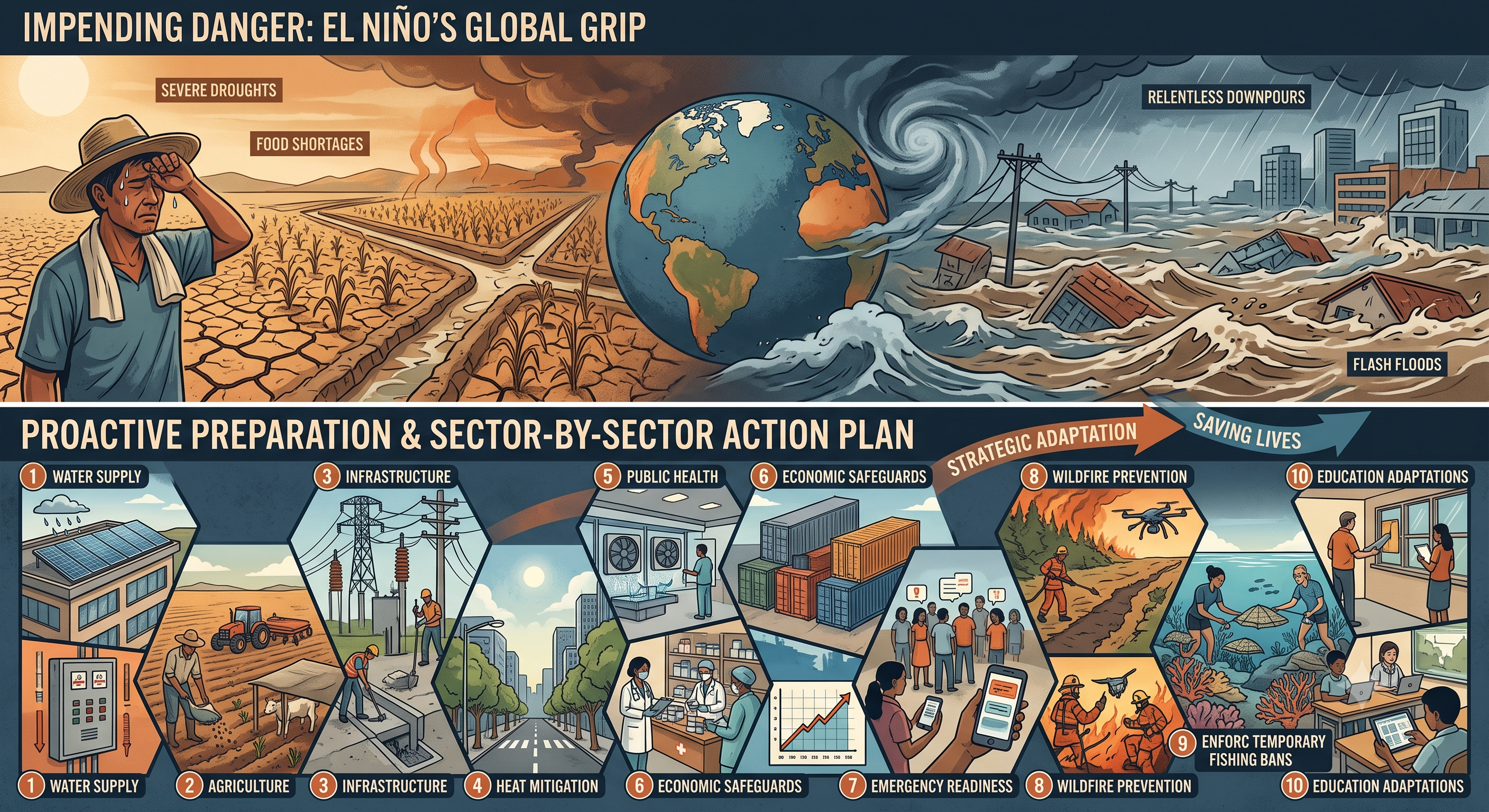
The Impending Danger of El Niño's Global Grip
El Niño is no longer a distant weather pattern; it is an immediate threat capable of destabilizing entire ecosystems and economies. As global temperatures surge, this climate phenomenon intensifies, triggering severe environmental shifts worldwide. From catastrophic droughts drying up vital agricultural zones to unprecedented heatwaves overloading urban grids, the sheer unpredictability of El Niño places millions of lives and livelihoods at extreme risk. Understanding the true scope of this danger is the first critical step toward survival.
Disruptions and Devastation Heading Our Way
The immediate consequences of a strong El Niño will be felt across multiple sectors. Extreme weather anomalies mean some regions will face relentless, torrential downpours leading to destructive flash floods, while others experience prolonged dry spells that fuel uncontrollable wildfires. Agriculture will suffer heavily, leading to sudden food shortages and skyrocketing commodity prices. Additionally, critical infrastructure, power grids, and clean water supplies will face immense strain, disrupting daily life and challenging community resilience on a massive scale.
Proactive Measures to Protect Communities and Assets
Waiting for El Niño to peak before taking action is a recipe for disaster; proactive preparation must begin immediately. Governments, businesses, and individuals need to invest in climate-proofing infrastructure, reinforcing flood defenses, and upgrading water storage systems. Implementing sustainable, drought-resistant agricultural practices and securing backup energy sources can mitigate the harshest economic shocks. By fostering community-level awareness and establishing robust emergency response protocols, we can drastically reduce vulnerabilities and save lives.
Comprehensive Sector-by-Sector Action Plan
1. Water Supply & Management
-
Implement strict water rationing protocols in high-risk zones.
-
Upgrade rainwater harvesting systems for commercial and residential buildings.
-
Conduct routine maintenance on community reservoirs and distribution pipelines to prevent leakage.
2. Agriculture and Food Security
| Crop Management | Livestock Protection | Supply Chain Security |
| Shift to drought-resistant seeds. | Establish shaded shelters for cattle. | Build emergency grain reserves. |
| Use drip irrigation to conserve water. | Secure alternative livestock feed supplies. | Monitor market pricing to curb inflation. |
3. Public Infrastructure & Energy Grids
-
Reinforce regional power grids to handle the surging demand for air conditioning.
-
Clear structural drainage systems in urban areas to prevent sudden flash flooding.
-
Deploy backup generators for critical facilities like hospitals and emergency services.
4. Extreme Heat Mitigation
| Urban Cool Zones | Public Directives | Worker Safety |
| Set up air-conditioned public hubs. | Issue mandatory high-heat advisories. | Restrict outdoor labor during peak hours. |
| Increase urban green canopy coverage. | Distribute free hydration packs. | Mandate frequent cooling breaks. |
5. Public Health and Disease Control
-
Stockpile essential medicines for heatstroke, dehydration, and waterborne illnesses.
-
Increase surveillance for vector-borne diseases like dengue and malaria in flood-prone zones.
-
Launch public hygiene campaigns focusing on safe drinking water treatment.
6. Financial & Economic Safeguards
| Business Contingency | Insurance & Relief | Consumer Protection |
| Diversity supply chains globally. | Expand climate insurance for farmers. | Subsidize essential food items. |
| Maintain higher cash reserves. | Allocate government emergency relief funds. | Freeze utility price hikes during peaks. |
7. Community Emergency Readiness
-
Establish localized emergency communication networks and text alert systems.
-
Conduct community-wide disaster evacuation drills for flood and wildfire scenarios.
-
Distribute emergency survival checklists to every household.
8. Wildfire Prevention & Management
| Preventive Zoning | Early Detection | Active Suppression |
| Create wide firebreaks near forests. | Deploy thermal drones for monitoring. | Position firefighting assets early. |
| Ban open burning during dry spells. | Train volunteer community fire watches. | Ensure dry-hydrant availability. |
9. Coastal & Marine Ecosystem Protection
-
Enforce temporary fishing bans in zones experiencing severe marine heatwaves.
-
Initiate coral reef shading and restoration projects to prevent mass bleaching.
-
Monitor coastal erosion driven by altered sea levels and storm surges.
10. Education Sector Adaptations
| School Schedule Adjustments | Facility Upgrades | Student Welfare |
| Shift classes to earlier morning hours. | Install heavy-duty fans and insulation. | Suspend outdoor sports activities. |
| Implement remote learning on peak days. | Ensure continuous clean water access. | Train staff in heat stroke first aid. |
Mental Health Impacts & Coping Strategies
The prolonged physical stress of extreme heatwaves, financial anxiety over rising costs, and the trauma of eco-disasters during El Niño can severely damage mental well-being. Recognizing these stressors and replacing negative coping mechanisms with healthy alternatives is vital for emotional resilience.
How El Niño Affects Mental Health
-
Eco-Anxiety & Chronic Stress: Constant worry about weather uncertainties, crop failures, or property damage creates a state of perpetual psychological tension.
-
Heat-Induced Irritability & Insomnia: High nocturnal temperatures disrupt sleep cycles, leading to chemical imbalances that elevate anger, anxiety, and depression.
-
Depression from Isolation: Extreme heatwaves or flooding force individuals to stay indoors, cutting off social interactions and leading to deep feelings of loneliness.
Healthy Replacements to Protect Psychological Well-being
| Negative Impact / Trait | What to Avoid / Eliminate | Healthy Replacement Strategies |
| Information Overload | Doomscrolling negative climate news constantly. | Scheduled Updates: Check trusted news sources only once a day; replace extra screen time with mindfulness or reading. |
| Physical Restlessness | Staying sedentary indoors all day due to heat. | Indoor Physical Activity: Substitute outdoor exercise with light indoor yoga, stretching, or home workouts during cooler hours. |
| Social Isolation | Disconnecting from friends and community. | Virtual & Indoor Gatherings: Replace outdoor meetups with digital check-ins, board game nights, or indoor community group activities. |
| Sleep Disruptions | Relying on sleeping pills or alcohol to rest. | Cool Down Rituals: Substitute heavy medication with a cool shower before bed, limiting caffeine, and practicing deep breathing exercises. |
| Feelings of Helplessness | Dwelling passively on uncontrollable weather. | Proactive Action: Channel anxiety into building a home emergency kit or joining local community resilience programs. |
