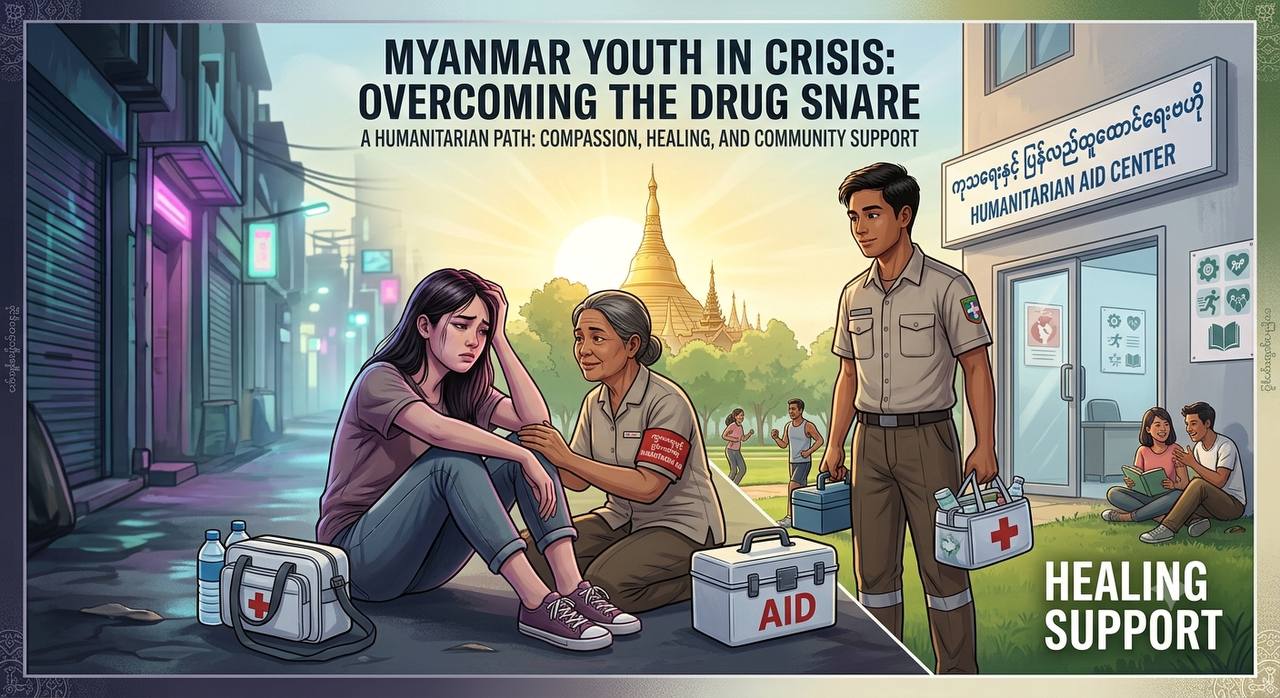
The Illusion of Escape
In recent times, an increasing number of young people in Myanmar are facing unprecedented societal and economic pressures. Seeking a temporary release from these heavy burdens, many are drawn into the nightlife scene and the dangerous allure of recreational drug use. What starts as a weekend distraction or a way to bond with peers quickly transforms into a deceptive illusion, masking the deeper issues rather than solving them.
A Destructive Path
While partying and substance use might feel like liberation in the moment, they quietly erode potential and trap individuals in a vicious cycle of dependency. The perception that today's youth are becoming "ruined" stems from witnessing a generation trade their ambitions, talents, and futures for fleeting highs. This lifestyle slowly strips away motivation, leaving behind broken relationships and shattered dreams.
Taking Back Control
It is crucial to recognize these hidden dangers and consciously step away before it is too late. Overcoming this crisis requires immense courage, a commitment to personal growth, and a firm refusal to let external circumstances dictate one's self-worth. By understanding the risks and actively choosing better paths, young people can reclaim their futures and build a resilient foundation for success.
1. The Reality of Substance Abuse
Many youths fall into drug use due to misconceptions. Understanding the truth is the first step to avoidance.
| Common Myth | The Harsh Reality |
|---|---|
| It relieves stress permanently. | It only suppresses stress, making it worse later. |
| I can quit whenever I want to. | Chemical dependency alters brain chemistry quickly. |
| Everyone else is doing it. | A vocal minority normalizes it; most are building their futures. |
2. Severe Financial Ruin
The lifestyle associated with regular partying and drug use is incredibly expensive and financially destructive.
- Drains personal savings and prevents any meaningful financial investments.
- Leads to borrowing money, creating a cycle of debt and guilt.
- Forces individuals to rely heavily on parents or family members, causing financial strain on the household.
- Results in lost earning potential due to missed work or lack of skill development.
3. Physical Health Decline
The human body takes a massive toll from consistent substance abuse and a lack of proper rest.
| Timeframe | Physical Consequences |
|---|---|
| Short-Term | Exhaustion, weight loss, weakened immune system, disrupted sleep. |
| Long-Term | Organ damage, chronic cardiovascular issues, severe cognitive decline. |
4. Erosion of Genuine Relationships
Substance abuse fundamentally changes how individuals interact with those who care about them the most.
- Destroys trust with family members due to lies and secretive behavior.
- Isolates the individual from sober, supportive, and ambitious friends.
- Replaces genuine connections with superficial relationships based entirely on partying.
- Creates emotional volatility, leading to unnecessary arguments and aggression.
5. The Death of Ambition
Drugs and excessive partying hijack the brain's reward system, killing the drive to achieve real-world goals.
| Motivated Mindset | Addicted Mindset |
|---|---|
| Finds joy in achieving goals and learning. | Only finds joy in the next party or high. |
| Plans for the future (1-5 years ahead). | Plans only for the weekend. |
| Embraces challenges to grow stronger. | Avoids effort and seeks immediate gratification. |
6. Legal and Social Risks
Engaging with illicit substances brings a high level of risk that can ruin a reputation overnight.
- Constant risk of arrest, which can lead to severe legal penalties and a permanent criminal record.
- Social stigma that can alienate an individual from their community and professional networks.
- Exposure to dangerous environments and criminal elements.
- Loss of travel opportunities, as criminal records restrict international visas.
7. Navigating Peer Pressure
Knowing how to respond to peer pressure is essential for staying on the right path.
| Toxic Pressure Phrase | Empowered Response |
|---|---|
| "Just try it once, don't be boring." | "I don't need it to have a good time. I'm good." |
| "Everyone is doing it tonight." | "I have early plans tomorrow that I can't miss." |
| "You've changed, you used to be fun." | "I'm focusing on my goals right now. Catch you later." |
8. The Theft of Time
Time is the most valuable asset a young person has, and this lifestyle steals it away without mercy.
- Countless hours lost to being intoxicated or hungover.
- Wasted weekends that could have been used for rest, family, or personal projects.
- Delayed personal development while peers advance in their careers.
- Time spent recovering physically and mentally rather than moving forward.
9. Professional Consequences
It is impossible to maintain a high level of professional success while battling substance issues.
| Professional Area | Impact of Substance Abuse |
|---|---|
| Reliability | Frequent lateness, unexcused absences, missed deadlines. |
| Performance | Poor concentration, lack of creativity, frequent mistakes. |
| Career Growth | Passed over for promotions, loss of job, inability to network. |
10. The Danger of Normalization
When a destructive habit is treated as "normal," it becomes much harder to break free from it.
- It blinds individuals to the actual damage being done to their lives.
- It creates echo chambers where bad behavior is constantly validated.
- It discourages individuals from seeking help because they believe their situation is standard.
- It passes the toxic culture down to younger, more impressionable peers.
How This Lifestyle Damages Mental Health
The connection between substance abuse and mental health crises is undeniable. Relying on chemicals to alter your mood fundamentally breaks the brain's natural ability to regulate emotions.
- Dopamine Depletion: Drugs flood the brain with artificial dopamine. Over time, the brain stops producing its own, leading to severe, chronic depression when sober.
- Heightened Anxiety and Paranoia: Many substances, especially synthetic stimulants, induce extreme paranoia, panic attacks, and constant baseline anxiety.
- Emotional Numbness: Users often lose the ability to feel natural joy from simple things like a good meal, a conversation, or a beautiful day.
- Identity Crisis: As the addiction takes over, individuals often lose their sense of self, leading to intense self-loathing and suicidal ideation.
- Cognitive Fog: Memory loss, inability to focus, and a general decline in mental sharpness make everyday tasks feel overwhelming.
Healthy Substitutes to Avoid the Snare
To successfully avoid or break free from this lifestyle, you cannot simply leave a void; you must replace bad habits with high-value, fulfilling activities.
- Physical Fitness: Channel your energy into the gym, running, lethwei, or yoga. Exercise releases natural endorphins that improve mood and build discipline.
- Skill Acquisition: Dedicate your free time to learning high-income skills like coding, graphic design, video editing, or a new language.
- Creative Outlets: Start creating rather than consuming. Start a YouTube channel, write a blog, play an instrument, or get into photography.
- Community Volunteering: Shift your focus from self-gratification to helping others. Volunteering provides a profound sense of purpose and connects you with positive, like-minded people.
- Curated Social Circles: Actively distance yourself from the party crowd and seek out networking events, workshops, and communities built around business, tech, or arts.
