**Dehydration** occurs when your body loses more fluid than you take in, disrupting the vital balance of minerals and severely affecting how your organs function at every level.
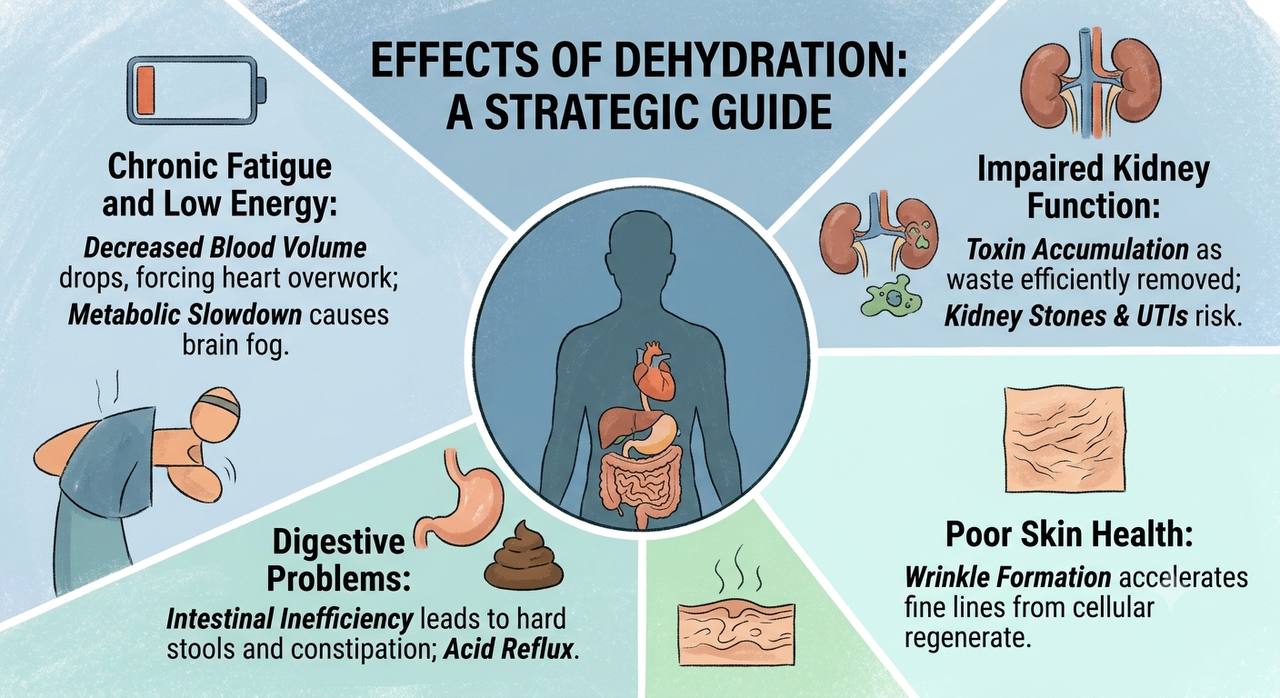
1. Chronic Fatigue and Low Energy
- **Decreased Blood Volume:** When you don't drink enough water, your blood volume drops, forcing your heart to work harder to pump oxygen and nutrients throughout your body, leading to persistent physical exhaustion.
- **Metabolic Slowdown:** Water is essential for metabolic processes; a lack of fluids slows down energy production, causing constant "brain fog" and lethargy.
2. Impaired Kidney Function and Urinary Issues
- **Toxin Accumulation:** Your kidneys require adequate water to filter waste products from your bloodstream. Chronic low water intake prevents efficient waste removal, leading to toxin buildup.
- **Kidney Stones and UTIs:** Concentrated urine allows minerals to crystallize, significantly increasing the risk of developing painful kidney stones and recurrent urinary tract infections (UTIs).
3. Digestive Problems and Constipation
- **Intestinal Inefficiency:** The digestive tract needs moisture to move food smoothly. When dehydrated, the large intestine absorbs water from food waste, resulting in hard stools and chronic constipation.
- **Acid Reflux:** A lack of water can weaken the stomach's mucosal lining, making it easier for stomach acid to cause inflammation and heartburn.
4. Headaches and Impaired Cognitive Function
- **Brain Tissue Shrinkage:** Even mild dehydration can cause brain tissue to temporarily shrink and pull away slightly from the skull, triggering dehydration headaches and migraines.
- **Reduced Concentration:** Low fluid levels negatively impact mood, memory, alertness, and overall cognitive performance during daily tasks.
5. Poor Skin Health and Premature Aging
- **Loss of Elasticity:** Water hydrates skin cells from within. Insufficient water intake causes the skin to become dry, tight, and flaky, reducing its natural barrier function.
- **Wrinkle Formation:** Long-term dehydration accelerates the appearance of fine lines, deep wrinkles, and premature aging due to a lack of proper cellular regeneration.
6. Joint Pain and Muscle Cramps
- **Reduced Lubrication:** Cartilage in your joints is composed of about 80% water. Inadequate hydration increases friction between bones, leading to joint pain and discomfort.
- **Electrolyte Imbalance:** A lack of fluids disrupts the balance of essential electrolytes, causing sudden, painful muscle cramps and spasms during physical activities.
Summary: Hydration Overview
- **Pros of Proper Hydration:** Enhances brain function, boosts physical stamina, aids digestion, and promotes glowing skin.
- **Cons of Dehydration:** Leads to persistent headaches, potential kidney damage, digestive distress, and chronic fatigue.
- **Main Goal:** Maintaining optimal fluid levels daily to support vital biological functions and protect long-term physical health.
