**Infidelity** is the breach of a relationship's mutually agreed-upon rules or boundaries, severely damaging trust, causing profound emotional distress, and often leading to the dissolution of the partnership.
1. The Reasons for Infidelity (The Causes)
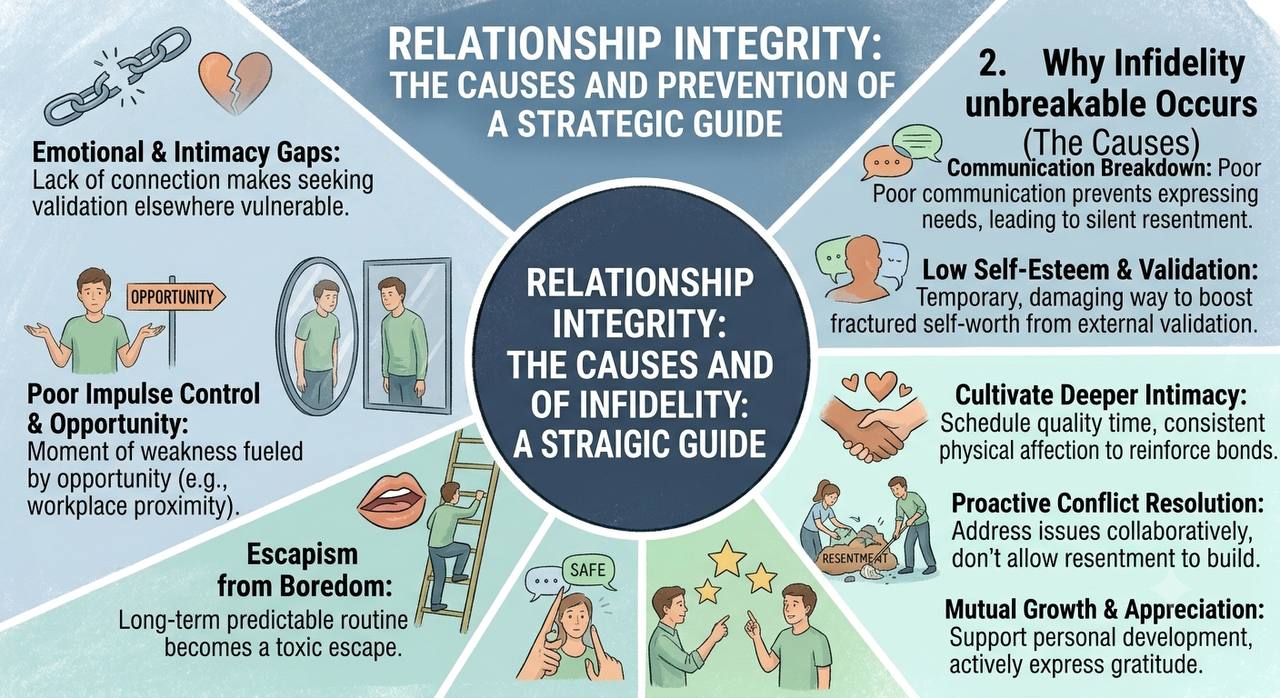
- **Emotional and Intimacy Gaps:** A persistent lack of emotional connection, appreciation, or intimacy makes individuals vulnerable to seeking validation and closeness elsewhere.
- **Unmet Needs and Communication Breakdown:** Poor communication prevents couples from expressing critical needs, leading to silent resentment and the perception that happiness is only possible outside the relationship.
- **Poor Impulse Control and Opportunity:** Moments of weakness, often fueled by poor judgment during physical separation, combine with opportunities (e.g., workplace proximity, social gatherings) to override commitment.
- **Low Self-Esteem and Seeking Validation:** Some individuals use external validation from a new partner as a temporary, but damaging, way to boost their own fractured self-worth.
- **Escapism from Boredom or Routine:** Long-term relationships can fall into a predictable routine; infidelity becomes a toxic form of escapism, providing a temporary rush of excitement or new relationship energy.
2. Preventing Infidelity (The Solutions)
- **Prioritize Radical Honesty and Open Communication:** Cultivate a relationship environment where both partners feel safe discussing difficult feelings, unmet needs, or relationship dissatisfaction without fear of immediate judgment.
- **Cultivate Deeper Emotional and Physical Intimacy:** Make a conscious effort to schedule quality time, engage in shared activities, and maintain consistent physical affection to reinforce emotional bonds.
- **Establish and Respect Clear Boundaries:** Have explicit conversations about acceptable emotional and physical closeness with others outside the relationship, and define what constitutes a violation of trust.
- **Commit to Proactive Conflict Resolution:** Address relationship issues immediately and collaboratively. Don't allow resentment to build up; instead, work towards mutually beneficial solutions.
- **Focus on Mutual Growth and Appreciation:** Support each other's personal development and actively express gratitude for your partner's contribution to your shared life. A stable relationship requires consistent, positive investment.
Summary: Relationship Overview
- **Aspect:** Relationship Stability and Integrity
- **Description:** The strength of trust, communication quality, and mutual investment determines overall relationship health and its resilience against external threats.
- **Main Goal:** Maintaining unbreakable trust and deep emotional investment to secure long-term partnership integrity.
