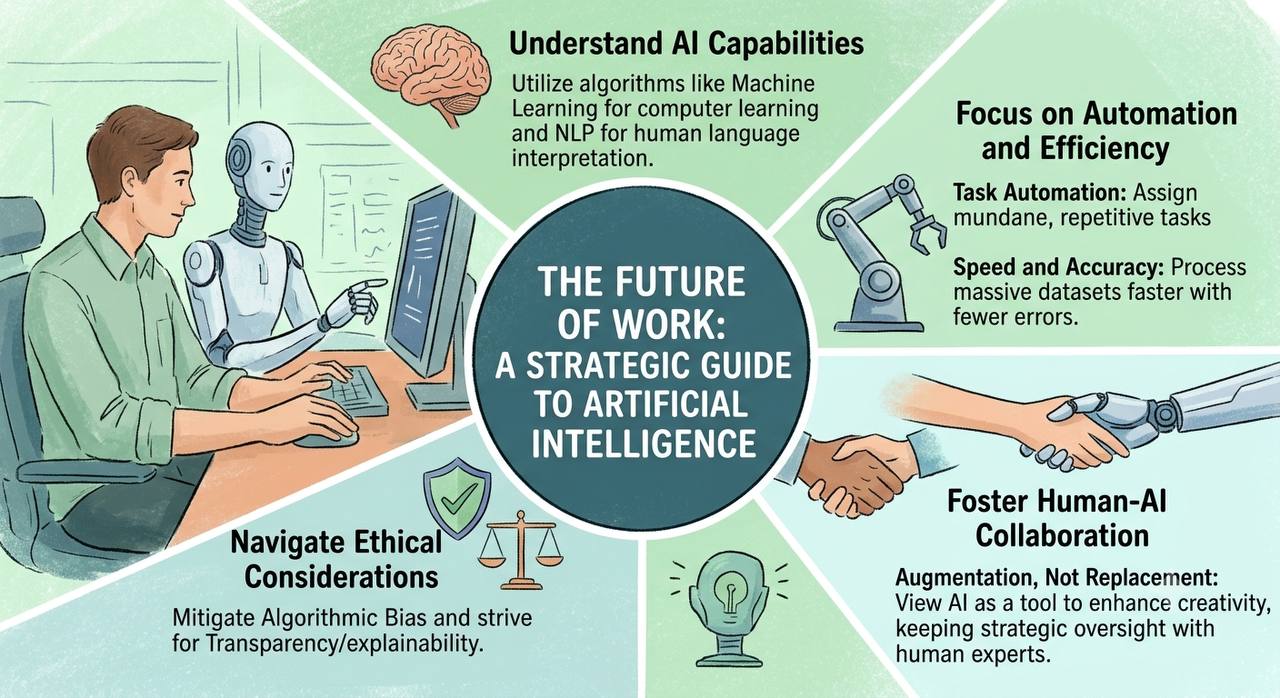
**Artificial Intelligence (AI)** is the simulation of human intelligence processes by machines, transforming how businesses operate, innovate, and interact with the world by automating complex tasks and analyzing vast amounts of data.
1. Understand AI Capabilities
- **Machine Learning:** Utilize algorithms that allow computers to learn from data and improve over time without being explicitly programmed.
- **Natural Language Processing (NLP):** Leverage AI to understand, interpret, and generate human language, making tools like chatbots and virtual assistants possible.
2. Focus on Automation and Efficiency
- **Task Automation:** Free up human workers by assigning mundane, repetitive, and administrative tasks to AI systems.
- **Speed and Accuracy:** Process massive datasets much faster and with significantly fewer errors than humanly possible, leading to better decision-making.
3. Prioritize Data Quality
- **Garbage In, Garbage Out:** Recognize that AI models are only as good as the data they are trained on; prioritize clean, accurate, and diverse data.
- **Privacy and Security:** Ensure all data collection and processing comply with strict ethical standards and global privacy regulations.
4. Foster Human-AI Collaboration
- **Augmentation, Not Replacement:** View AI as a powerful tool to enhance human creativity and capabilities, rather than a total replacement for the workforce.
- **Strategic Oversight:** Rely on AI for heavy data analysis while keeping human experts in charge of final strategic, ethical, and empathetic decisions.
5. Navigate Ethical Considerations
- **Algorithmic Bias:** Actively monitor and mitigate biases in your AI systems to prevent unfair or discriminatory outcomes based on flawed historical data.
- **Transparency:** Strive for "explainable AI" so users, customers, and stakeholders can understand how an algorithm reaches its specific conclusions.
Summary: Artificial Intelligence Overview
- **Pros:** Increases overall efficiency, provides 24/7 availability, and handles complex data analysis effortlessly.
- **Cons:** High initial implementation costs, requires specialized talent, and presents ongoing ethical and bias challenges.
- **Main Goal:** Leveraging machine intelligence to augment human potential and solve complex, data-heavy problems efficiently.
