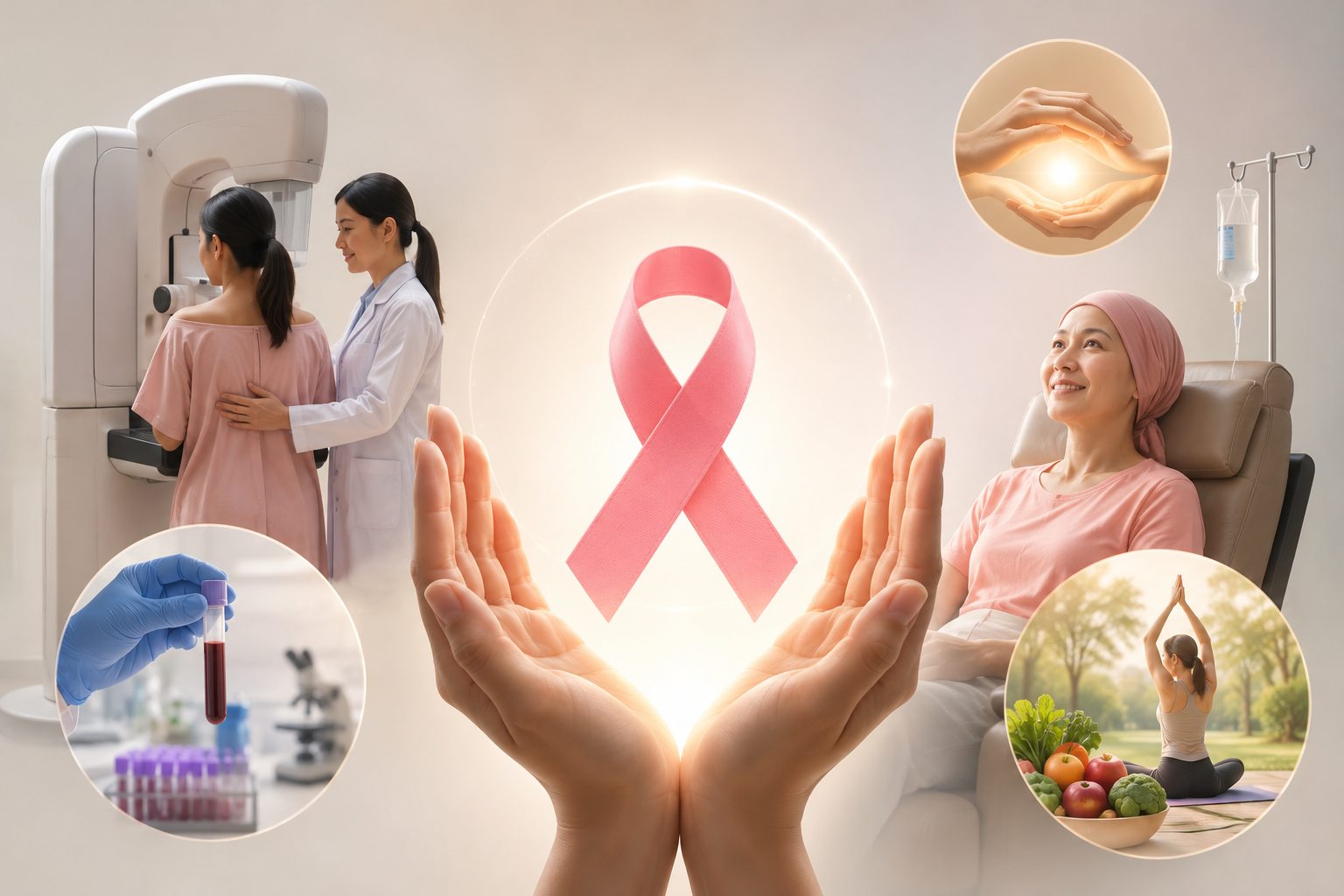
How can we detect cancer at the earliest stage? Everyone must have wondered about this at least once. It is very important because early detection makes it possible to cure the disease.
If cancer is detected at the earliest stage, the success rate for recovery is over 90%. However, if it is detected late, we cannot talk about a cure. We can only look at the survival rate within 5 years. This rate is often less than 50%, and for some types of cancer, it is as low as 10%. That is why it is very important to detect it as early as possible. However, early detection is not easy. Even healthcare professionals who work with patients every day sometimes fail to notice the symptoms and only discover the cancer at a late stage.
This is because, in the early stages, cancer often does not show clear symptoms. Therefore, I will share how to detect it by dividing it into two parts: identifying symptoms and health check-ups.
Symptoms of Early Cancer
Generally, you should be careful about persistent pain or discomfort that has no clear reason.
-
Unexplained weight loss: Losing about 10 pounds in 2 weeks to a month without dieting or exercise.
-
Loss of appetite: Indigestion or bloating that lasts for nearly 2 weeks.
-
Fever: Having a fever that comes and goes for over 2 weeks.
-
Unexplained fatigue: Feeling exhausted without having sleep deprivation or working too hard.
-
Blood in urine or stool: Although blood in stool is often caused by hemorrhoids, it can be a sign of cancer, so you should check with a doctor.
-
Bowel changes: Alternating between constipation and diarrhea.
-
Persistent cough: A cough that lasts over 2 months and does not improve with medicine.
-
Difficulty swallowing: Trouble swallowing food.
-
Skin changes: An existing mole changing in size, color, or shape, or a new spot on the skin with an irregular appearance. (It is better to take a photo of suspicious skin sores with the date to keep a record).
-
Non-healing sores: A sore on the skin, mouth, or lips that does not heal after 3-4 weeks, or a sore that bleeds without any injury.
-
New lumps: A lump that appears on the body and grows over a month without pain.
-
Persistent pain: Pain in a specific area (like the back or bones) that does not improve after 2 weeks, even with medicine, massage, or exercise.
-
Voice changes: A change in your voice, especially if it sounds hoarse.
-
Vision problems: Blurred vision or feeling like your eye is bulging.
If you have these symptoms, you should consult a doctor. You know your own body best, so you need to pay attention to these changes.
Can Cancer Exist Before Symptoms Appear?
Yes, it can. That is why regular health screenings for common and preventable cancers are important. Some people have been saved because they caught the cancer early through a check-up before symptoms appeared.
Cancer has a "Stage 0" before "Stage 1," where abnormal cells that could become cancer are found. We cannot screen for every type of cancer yet, but we can screen for the most common ones:
-
Pap smear: To detect cervical cancer.
-
Mammogram: To detect breast cancer in women.
-
Colonoscopy or FOBT: To detect colon cancer (using a scope or checking for hidden blood in the stool).
When Should You Start Screening?
Around age 40 to 45, the immune system—which normally kills daily cancer cells—starts to weaken, so you should start screening after 40. However, if there is a family history (like parents, children, or siblings with colon or breast cancer), you should not wait until 40. For example, if there is a strong family history of colon cancer, some people start having colonoscopies at age 10 or 18.
For those over 40, routine checks like chest X-rays, abdominal ultrasounds, and blood tests for tumor markers (CA 19-9, CA 125, CEA, AFP, PSA) can help estimate risk. However, high tumor markers do not immediately mean you have cancer. You must undergo further tests and a biopsy for confirmation.
In summary, you cannot easily detect cancer with just one blood test. It is confirmed based on your own symptoms and screening results. If you have any unexplained symptoms or a family history of cancer, I encourage you to consult a doctor early.
Cancer Treatment Methods
Treatment is decided after determining the cancer stage and type through a biopsy. Recently, doctors also perform "biomarker testing" to see if there are genes that cause the cancer to grow.
-
Surgery: In early stages, the tumor is removed along with surrounding tissue. The tumor is tested in the lab to see if cancer cells remain at the edges. Even after surgery, you may need follow-up appointments and medication because microscopic cells might still be in the blood. Sometimes, if the tumor is near vital organs, doctors may remove as much as possible to shrink it before using radiation or chemotherapy. In late stages, surgery is used to relieve symptoms (e.g., removing a tumor that presses on nerves to stop pain).
-
Radiation Therapy: Using X-rays or Gamma rays to kill cancer cells by destroying their DNA. It usually takes several weeks of daily sessions. A new method called SBRT uses precise radiation, meaning it may only take 5 sessions. Sometimes, radiation is given from inside the body through a tube in the blood vessel.
-
Chemotherapy: Uses drugs to kill rapidly dividing cancer cells throughout the body. It is most effective for blood cancers like leukemia. In some cases, it is used to shrink a tumor before surgery or radiation. The downside is that it also affects healthy rapidly-growing cells (like hair, stomach lining, and bone marrow), causing hair loss, nausea, diarrhea, and anemia.
-
Newer Treatments:
-
Targeted Therapy: Targets specific proteins in cancer cells without harming healthy ones. However, cancer cells can mutate and stop responding to these drugs over time.
-
Immunotherapy: Blocks the "checkpoints" that cancer cells use to hide from the immune system, allowing the body to fight them. This works well regardless of how the cancer cells change.
-
Cell Therapy: Extracts immune cells from the patient, engineers them in a lab to fight cancer, and reintroduces them into the blood. It is promising but challenging for solid tumors.
-
Cancer treatment is a long-term plan. It is not just about one surgery or one course of medicine; it requires constant monitoring and re-evaluation. Scientists are continuously researching better drugs and treatments. Depending on the stage, survival rates vary, so please take care of your lifestyle and go for regular check-ups.
