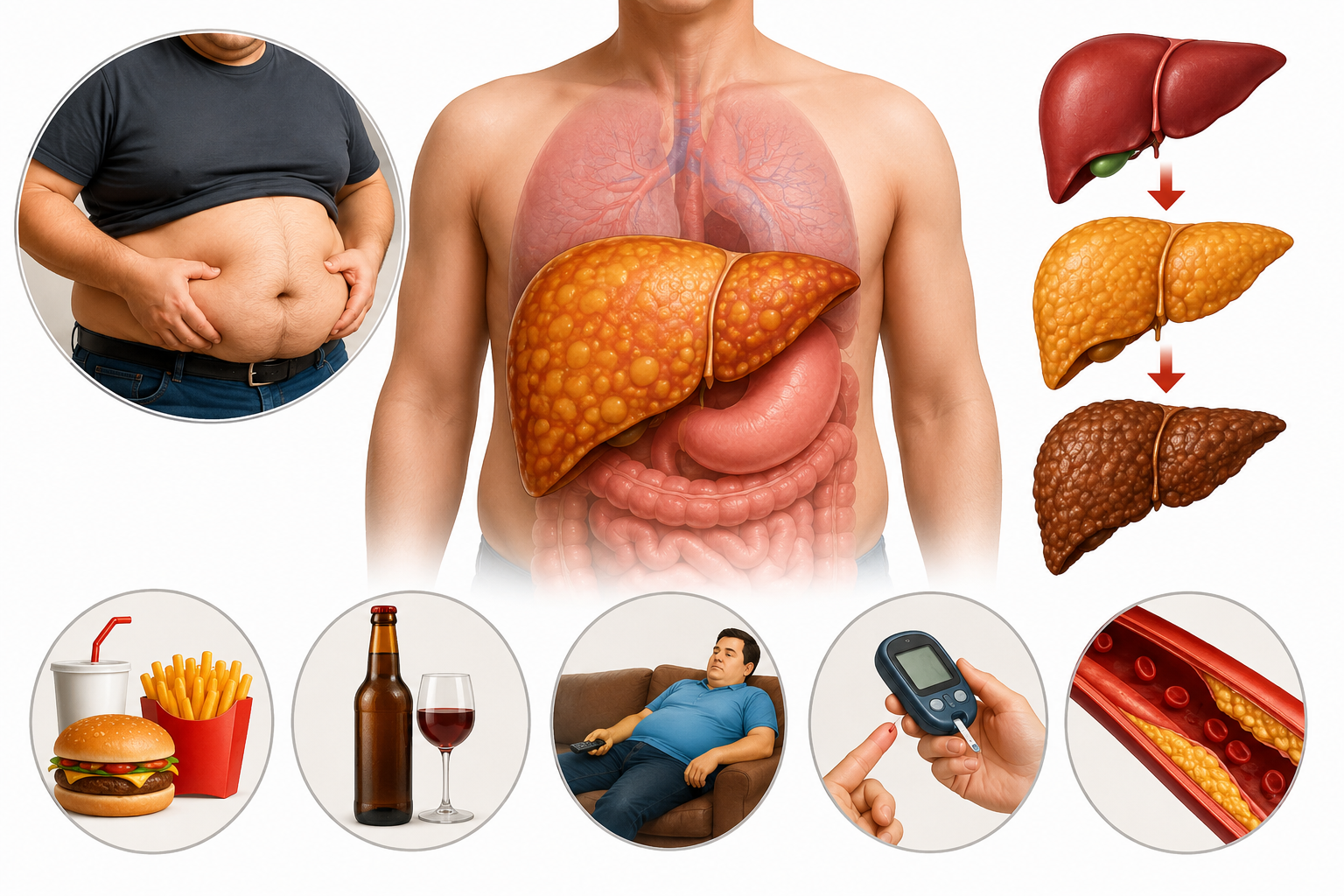
Many people say, "Fatty liver isn't a big deal. Just drink more water and you'll be fine."
Honestly, that's a dangerous misunderstanding.
The truth is, fatty liver disease is far more serious than most people think. It's not a minor health issue that you can simply ignore. It's a condition that slowly damages your liver over time, often without obvious warning signs.
Stage 1 Fatty Liver Disease
In the earliest stage, fat begins to accumulate inside the liver.
The surprising part is that most people don't notice anything unusual.
There may be no abdominal pain, no digestive problems, and no discomfort at all. You can still feel healthy, eat normally, and continue your daily routine without realizing anything is wrong.
That's why many people don't even know they have fatty liver disease.
In many cases, it's discovered by accident during a routine medical checkup or when an ultrasound is performed for an unrelated stomach problem.
The good news is that this is actually the best time to find it.
Once fatty liver is detected, simple lifestyle changes can make a huge difference. Losing excess weight, exercising regularly, cutting back on sugary foods and drinks, and reducing unhealthy fats can allow the liver to heal itself.
At this stage, most people don't even need complicated medications.
What Happens If You Ignore It?
Unfortunately, many people take early-stage fatty liver disease too lightly.
Instead of making healthy lifestyle changes, they continue with their usual habits.
As more fat builds up inside the liver, the liver cells begin to become inflamed.
This is the stage where inflammation develops.
Over time, those inflamed liver cells start becoming damaged.
Some people may notice that their liver enzyme levels become elevated during blood tests.
Others may experience a dull ache or a feeling of fullness beneath the right side of the rib cage, especially when bending forward or sitting in certain positions.
However, many people simply assume it's nothing more than trapped gas or minor stomach discomfort.
Because they don't feel seriously ill, they don't seek medical attention.
Without treatment, the disease quietly continues to progress.
When Scarring Begins
As inflammation continues for months or even years, the damaged liver tissue gradually turns into scar tissue.
This condition is called fibrosis.
In simple terms, the liver slowly becomes harder because healthy tissue is being replaced with scar tissue.
And no—I don't mean your liver has become "hard-hearted" after a few heartbreaks.
I mean the liver literally becomes stiff and scarred.
At this point, your liver is still functioning, but it is no longer working as efficiently as it once did.
If the scarring continues to spread, it can eventually develop into liver cirrhosis, a condition where scar tissue replaces most of the healthy liver.
Once cirrhosis develops, the liver can no longer perform its normal functions properly.
When Fatty Liver Disease Progresses to Cirrhosis
Once fatty liver disease reaches the stage of liver cirrhosis, the liver becomes extensively scarred and can no longer function properly.
At this point, serious health problems begin to appear.
Your abdomen may become swollen because fluid starts to build up inside the belly. Your eyes and skin may turn yellow, a condition known as jaundice. Your legs and feet can become swollen, and your body may bruise or bleed much more easily than before.
The veins in the esophagus can also become enlarged. If one of these veins ruptures, it may cause sudden and severe vomiting of blood, which is a life-threatening medical emergency.
Some people develop another serious complication because the damaged liver can no longer remove harmful toxins from the bloodstream. These toxins eventually reach the brain, causing confusion, slurred speech, poor concentration, excessive sleepiness, and in severe cases, loss of consciousness or even coma.
Unfortunately, the risks don't stop there.
People living with liver cirrhosis also have a much higher chance of developing liver cancer.
That's why fatty liver disease should never be dismissed as "just a little extra fat in the liver."
If it isn't managed early, it can gradually progress into liver cirrhosis, liver failure, and even liver cancer.
Fatty Liver Doesn't Only Affect the Liver
Another important fact that many people don't realize is that fatty liver disease doesn't only increase the risk of liver-related problems.
People with fatty liver are also much more likely to develop type 2 diabetes, high blood pressure, and high cholesterol.
Their risk of heart disease and stroke is also significantly higher.
In fact, studies have shown that many people with fatty liver disease are more likely to die from cardiovascular disease than from liver disease itself.
This is why fatty liver should never be ignored.
The Good News
The encouraging news is that early-stage fatty liver disease is often reversible.
If you're overweight, start by losing weight gradually rather than trying to lose it too quickly.
Aim to stay physically active at least four or five days a week.
Reduce sugary drinks such as sweetened tea, bubble tea, soft drinks, and energy drinks whenever possible.
Try not to eat excessive amounts of white rice, sugary foods, desserts, and refined carbohydrates.
Instead, include more vegetables in your meals and make sure you're getting enough healthy sources of protein.
If you drink alcohol regularly, reducing or stopping alcohol consumption can greatly improve your liver health.
If you have diabetes, manage your blood sugar carefully.
If you have high blood pressure or high cholesterol, follow your doctor's advice and keep those conditions under control as well.
Even if you feel completely healthy, it's still a good idea to have a liver ultrasound once a year to check for fatty liver disease.
If you regularly drink alcohol or already have diabetes or high blood pressure, consider having your liver checked every six months.
The earlier fatty liver disease is detected, the better your chances of preventing serious complications and protecting your long-term health.
Five Foods That Can Help People with Fatty Liver Disease
Many people become confused after learning they have fatty liver disease.
They often wonder which foods are safe to eat and which ones might make their condition worse.
Some people become so worried that they start avoiding too many foods, which can eventually lead to poor nutrition.
The truth is, understanding which foods are beneficial makes healthy eating much easier.
The following five foods are excellent choices for supporting liver health and may help reduce fat accumulation in the liver when combined with a healthy lifestyle.
The Five Best Foods for Fatty Liver Disease
1. Black Coffee
The first one might surprise you—black coffee.
Unsweetened black coffee has been shown to help reduce liver inflammation and may also slow down liver damage. If you enjoy coffee, drinking it without sugar can be a healthy choice for your liver.
2. Fatty Fish
The second food is fatty fish.
Fish such as salmon, mackerel, sardines, and tuna are rich in omega-3 fatty acids, which may help reduce the amount of fat stored in the liver while also supporting overall heart health.
3. Green Vegetables
The third group is green leafy vegetables.
Vegetables like spinach, broccoli, kale, mustard greens, and other leafy greens are packed with fiber, vitamins, minerals, and antioxidants.
These nutrients help support healthy liver function and may reduce the buildup of fat throughout the body.
4. Oats
The fourth food is oats.
Oats are an excellent source of dietary fiber. They slow down digestion, helping blood sugar remain more stable after meals.
Because they keep you feeling full for longer, oats can also make weight management easier, which is one of the most important steps in improving fatty liver disease.
5. Beans and Legumes
The fifth recommendation is beans and legumes.
Foods such as kidney beans, chickpeas, lentils, black beans, and other legumes are rich in both protein and fiber.
They are filling, nutritious, and an excellent choice for people with fatty liver disease because they help support a balanced diet while reducing the need for highly processed foods.
One Final Thing You Should Remember
There is one very important point I want to leave you with.
Simply eating these five foods alone will not make fatty liver disease disappear overnight.
For real improvement, these healthy foods need to be combined with healthy habits.
Reduce or avoid alcohol.
Cut back on sugary drinks.
Exercise regularly.
Maintain a healthy body weight.
Control diabetes, high blood pressure, and high cholesterol if you have them.
When all of these lifestyle changes are practiced together, your liver has a much better chance of healing and recovering over time.
Fatty liver disease is often silent in its early stages, but that doesn't mean it's harmless. The sooner you recognize it and make positive lifestyle changes, the greater your chances of protecting your liver and preventing serious complications in the future.
Avoid Harmful Habits
Limit or avoid alcohol, reduce sugary drinks and processed foods, quit smoking, and drink plenty of water to support liver function.
Regular Health Monitoring
Have regular medical checkups and manage conditions such as diabetes, high cholesterol, and obesity to help prevent fatty liver disease and keep your liver healthy.
