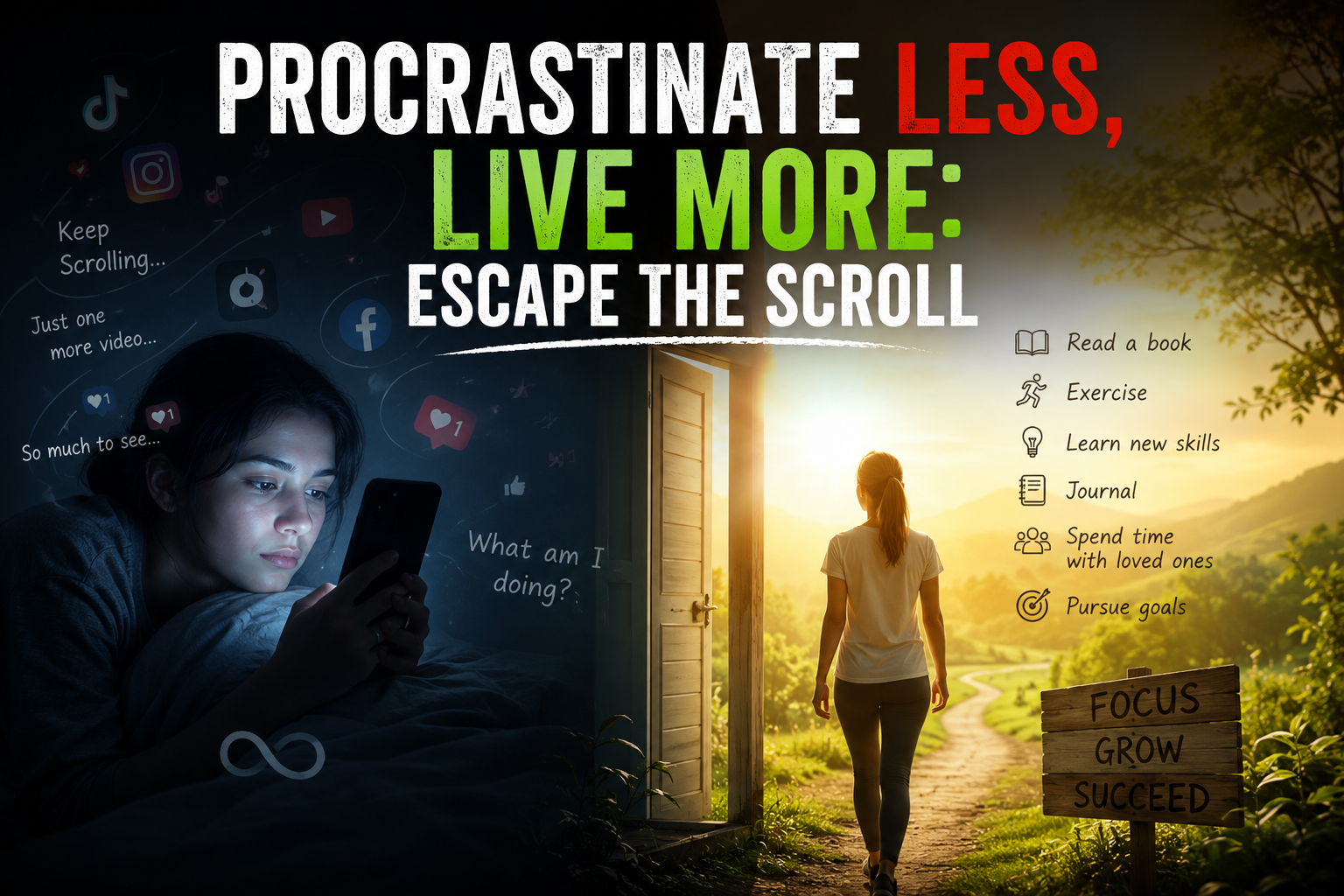
Why We Keep Scrolling
Almost everyone has picked up their phone just to "check something" and ended up scrolling for far longer than expected. A quick look at Instagram, Facebook, TikTok, or YouTube can easily turn into an hour without you even noticing.
This doesn't happen because you lack self-control. Social media platforms are intentionally designed to keep users engaged. Every swipe brings something new—a funny video, an interesting story, breaking news, or another post that catches your attention. Since you never know what you'll see next, your brain keeps encouraging you to scroll just a little longer.
Over time, this habit becomes automatic. Many people unlock their phones without even thinking about why they picked them up in the first place.
Procrastination Is More Than Laziness
When people hear the word procrastination, they often think it simply means being lazy. In reality, procrastination is usually much more complicated.
Many people delay important tasks because those tasks feel difficult, stressful, boring, or overwhelming. Instead of facing those uncomfortable feelings, the brain naturally looks for something easier and more enjoyable.
Social media offers the perfect escape. It provides instant entertainment, requires almost no effort, and gives immediate rewards. Watching one short video feels much easier than writing a report, studying for an exam, or starting a challenging project.
Unfortunately, the temporary relief doesn't solve the problem. The unfinished work is still there, often creating even more stress later.
Why Social Media Is So Hard to Put Down
Several design features make social media especially addictive.
Endless Scrolling
Unlike books or television episodes, social media has no natural stopping point. New content keeps appearing, making it easy to lose track of time.
Personalized Recommendations
Algorithms learn what you enjoy watching and continuously show similar content. As a result, every post feels more relevant, making it harder to stop scrolling.
Short Videos
Short-form videos provide entertainment in just a few seconds. Since each video is brief, your brain keeps telling you, "Just one more."
Instant Feedback
Likes, comments, and shares create small bursts of satisfaction. These positive signals encourage people to return to the app repeatedly throughout the day.
Fear of Missing Out (FOMO)
Many users worry they'll miss important news, trending topics, or conversations if they don't check social media regularly. This fear encourages frequent app checking, even when there's no real need.
Signs That Scrolling Has Become Procrastination
Sometimes it's difficult to recognize when scrolling changes from a harmless break into a habit that interferes with daily life.
Some common signs include:
- You intend to scroll for five minutes but spend an hour online.
- You open social media automatically whenever you feel bored.
- Important tasks keep getting postponed because scrolling feels easier.
- Your attention span becomes shorter, making it difficult to concentrate.
- You stay awake late at night saying, "Just one more video."
If several of these habits sound familiar, social media may be replacing activities that truly deserve your time.
What Usually Triggers Mindless Scrolling?
People rarely scroll for no reason. Most of the time, certain emotions or situations trigger the behavior.
Boredom
Quiet moments often feel uncomfortable, so people reach for their phones to stay entertained.
Stress
Scrolling can temporarily distract the mind from work pressure, deadlines, or personal problems.
Loneliness
Social media creates the feeling of connection, even though online interaction doesn't always replace meaningful real-life relationships.
Waiting
Whether standing in line, riding a bus, or waiting for food, many people automatically fill every empty moment by checking their phones.
Feeling Overwhelmed
Large or difficult tasks can seem intimidating. Scrolling becomes an easy way to delay getting started.
What Happens Inside Your Brain?
Every interesting post, funny video, or notification can trigger the release of dopamine, a chemical associated with motivation and reward.
This doesn't mean dopamine is bad—it helps people enjoy positive experiences. However, when rewards arrive quickly and repeatedly, the brain starts expecting constant stimulation.
Meanwhile, activities that require patience, such as studying, reading, or completing work projects, begin to feel less exciting. Over time, this makes it easier to choose scrolling instead of focusing on long-term goals.
Small Daily Habits That Make a Big Difference
Breaking the scrolling habit doesn't require giving up social media completely. Small, consistent changes often work better.
Start by setting reasonable screen time limits instead of trying to quit overnight.
Turn off unnecessary notifications so your phone interrupts you less often.
Use the five-minute rule. Tell yourself you'll work on an important task for just five minutes. Getting started is usually the hardest part, and once you begin, it's often easier to keep going.
Place your phone somewhere out of reach while studying or working. Even seeing your phone nearby can make it harder to stay focused.
Finally, choose specific times during the day to check social media instead of opening apps whenever you feel distracted.
Better Ways to Spend Your Free Time
Reducing screen time creates space for activities that provide longer-lasting satisfaction.
Reading a book strengthens concentration while expanding your knowledge.
Regular exercise improves both physical and mental health by reducing stress and boosting energy.
Learning a new skill—whether it's cooking, coding, photography, or a new language—can build confidence and open new opportunities.
Writing in a journal helps organize thoughts, reduce stress, and improve self-awareness.
Even taking a short walk outdoors can refresh your mind and improve your mood more effectively than endless scrolling.
The Benefits of Spending Less Time Online
People who reduce unnecessary screen time often notice positive changes surprisingly quickly.
Many experience better focus because their attention is no longer constantly interrupted.
Sleep quality improves, especially when phones are avoided before bedtime.
Productivity increases because more time is spent completing meaningful tasks rather than consuming endless content.
Self-confidence also improves since people spend less time comparing their lives with carefully edited versions of other people's lives online.
Perhaps the biggest benefit is simply having more free time for hobbies, family, friends, and personal growth.
The Hidden Impact on Mental Health
Social media isn't always harmful, but excessive use can negatively affect mental well-being.
Constant exposure to information can increase feelings of anxiety and mental overload.
Comparing yourself with carefully curated posts may reduce self-esteem, even when those posts don't reflect reality.
Late-night scrolling exposes your eyes to blue light while keeping your brain active, making it more difficult to fall asleep.
Over time, nonstop digital stimulation may also lead to mental fatigue, often called digital burnout.
Recognizing these effects early makes it easier to build healthier habits before they become difficult to change.
Healthy Habits That Replace Mindless Scrolling
Instead of reaching for your phone automatically, try replacing the habit with something more rewarding.
Practice mindfulness by paying attention to the present moment rather than constantly seeking digital stimulation.
Spend quality time with family and friends, building stronger relationships through real conversations.
Explore creative hobbies such as drawing, writing, music, or photography to express yourself in meaningful ways.
Listen to educational podcasts during walks or daily routines to learn something new while relaxing.
Most importantly, set personal goals that give your time and attention a clear purpose. When your days are guided by meaningful goals, scrolling becomes much less tempting.
Final Thoughts
Procrastination rarely happens all at once. More often, it grows through small decisions—checking one notification, watching one short video, or scrolling for "just a few minutes." Before you know it, valuable time has disappeared.
Social media itself isn't the enemy. The real challenge is using it intentionally instead of allowing it to control your attention.
Every minute you spend focusing on your goals is an investment in your future. By becoming more aware of your habits and making small daily changes, you can spend less time scrolling, accomplish more, and create a healthier, more balanced life.
