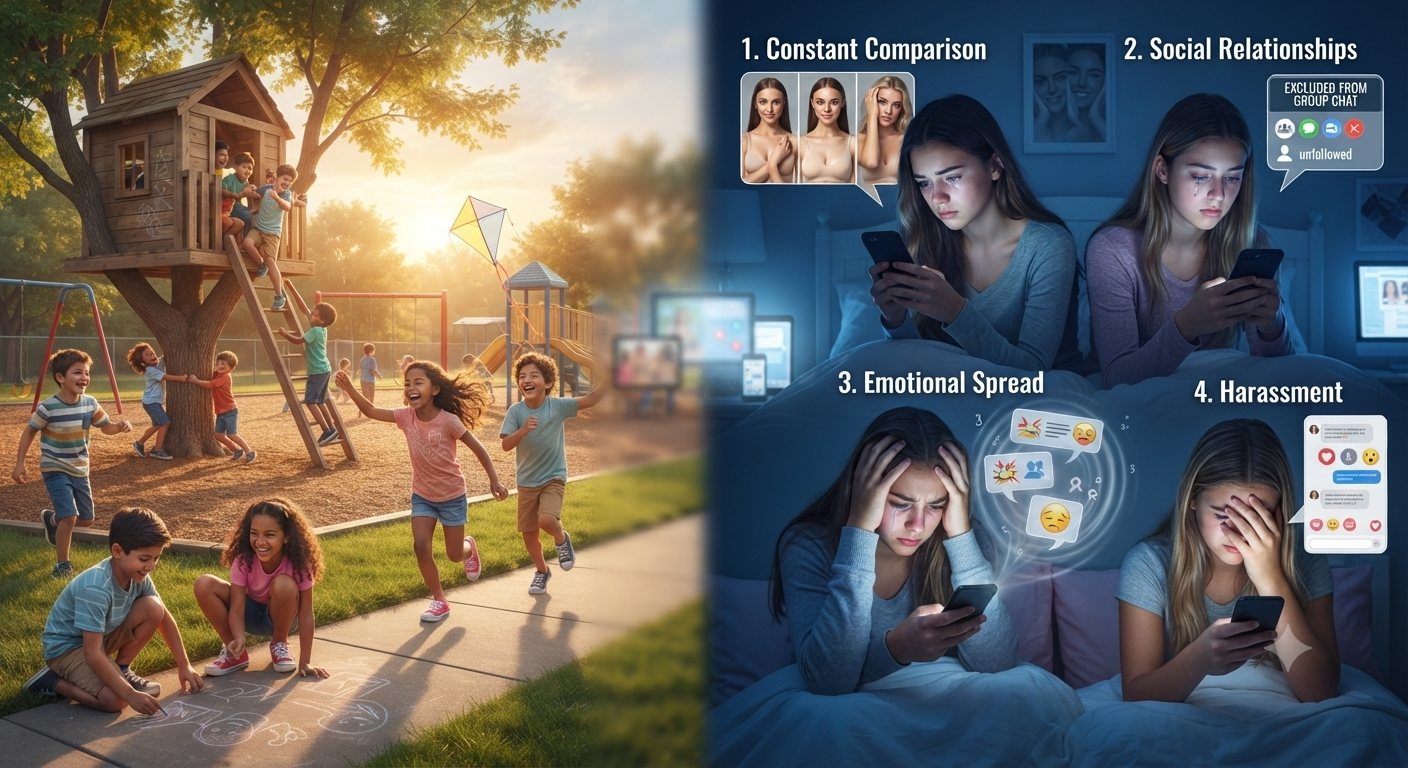
Childhood was once centered around outdoor games, imagination, and face-to-face friendships. But since smartphones and social media became a part of everyday life after 2010, many experts believe we've moved from a play-based childhood to a phone-based childhood.
Even adults struggle with the effects of excessive smartphone use, including addiction, sleep problems, shorter attention spans, and mental health challenges. For teenagers, whose brains and identities are still developing, the impact can be even greater.
Research also suggests that teenage girls are generally more vulnerable to these negative effects than boys. While every individual is different, several social and cultural factors help explain why.
1. Constant Comparison and Unrealistic Beauty Standards
Teenage girls are often more likely to compare themselves with others, especially when it comes to appearance.
Social media is filled with edited photos, beauty filters, and carefully curated lifestyles. Every day, girls are exposed to images that promote unrealistic standards of beauty—perfect skin, ideal body shapes, flawless makeup, fashionable clothes, and even cosmetic procedures.
Many of these images don't reflect reality, yet they create pressure to look "perfect." Girls who don't fit these ideals, or who cannot afford expensive beauty products or treatments, may begin to feel insecure or dissatisfied with themselves.
Over time, constant comparison can lower self-esteem and negatively affect mental well-being.
2. Social Relationships Matter More Online
Friendships and social acceptance play an important role during adolescence.
For many teenage girls, being accepted by their peer group feels especially important. Social media has made this even more complicated because friendships now continue online long after school ends.
Being ignored, excluded from group chats, unfollowed, or receiving fewer likes and reactions can feel deeply personal. Online gossip, silent treatment, or cyberbullying may create emotional pain that lasts far beyond the screen.
The pressure to stay connected and gain approval online can become overwhelming.
3. Emotions Spread Quickly Through Social Media
People naturally share both happy and difficult moments online.
However, emotions—especially negative ones—can spread through social networks. Seeing friends constantly post about stress, anxiety, heartbreak, or personal struggles may gradually affect the emotional state of others who read those posts every day.
Unlike counselors or mental health professionals, teenagers often absorb these emotions without knowing how to process them, increasing feelings of sadness or emotional exhaustion.
4. Girls Are More Frequently Targeted by Online Harassment
Cyberbullying remains one of the biggest dangers of social media.
Teenage girls are often more likely to experience online harassment, including rumors, body shaming, image sharing without consent, threats, and cruel comments about their appearance or personal lives.
Whether someone is criticized for being too thin, too curvy, single, divorced, or simply different, the internet often provides a platform for judgment and humiliation.
These experiences can seriously affect confidence, emotional health, and overall well-being.
The Challenge for Parents
Completely banning social media is rarely a practical solution.
If teenagers are entirely cut off from social platforms, they may feel isolated from friends and miss important social interactions. At the same time, giving unlimited access without guidance can expose them to significant risks.
Many parents also struggle to monitor their children's online activities. Teenagers often find creative ways to hide apps or create private accounts that adults never see.
Because of this, maintaining strong emotional connections within the family becomes more important than simply setting rules.
Building Awareness Is the First Step
Social media itself is not inherently harmful. It offers opportunities to learn, communicate, and stay connected.
However, understanding its potential impact on teenage mental health is essential. By encouraging open conversations, promoting healthy digital habits, and helping young people build confidence beyond social media, families can reduce many of the risks.
Awareness is the first step toward creating a healthier relationship with technology and supporting the next generation as they grow up in an increasingly digital world.
In the end, social media should be a tool that supports life—not one that controls it. By promoting healthy online habits, encouraging open conversations, and reminding young people that their worth is never defined by likes, followers, or appearance, we can help create a healthier and happier digital generation.
